

How to Choose the Right Operating Mode for Your Solar Battery System
Installing solar panels and a battery is the starting point. How the system manages energy determines when solar power supplies the building, when the battery charges, and how much electricity is purchased from the grid.
The same hardware can deliver different results under different operating strategies. A household focused on reducing electricity purchases may need a different configuration from a property where outage preparedness is the main concern.
For installers and distributors, selecting the operating strategy should be part of the system design and commissioning process.
Start with the customer’s priority: higher solar self-consumption, lower peak-period electricity costs, backup readiness, or independent off-grid operation.
EITAI batteries provide the energy storage component. The compatible inverter or energy management system controls the operating strategy, subject to battery limits, system configuration, and local grid requirements.
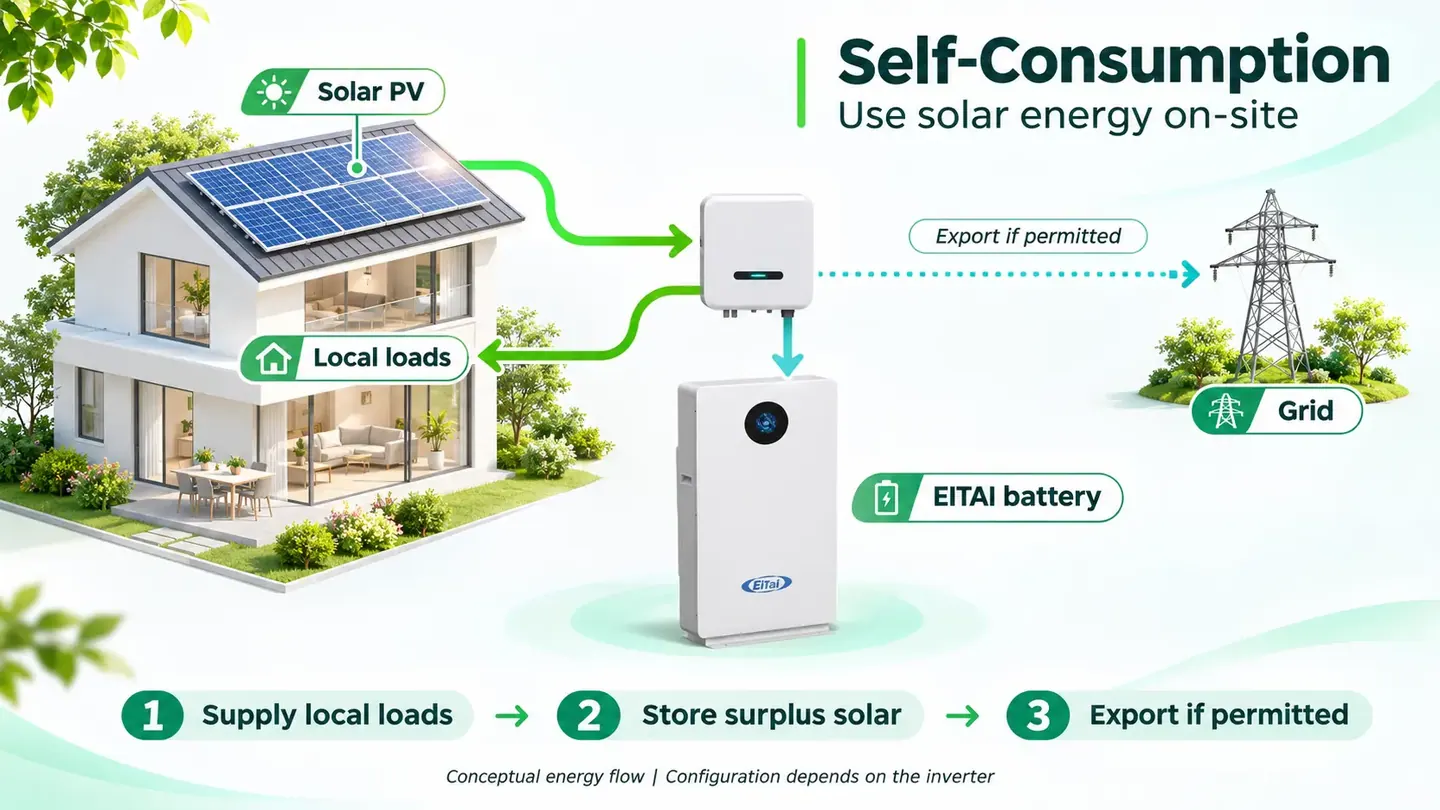
1. Self-Consumption: Use More of the Solar Energy Generated On-Site
Self-consumption is a practical starting point for customers who want to reduce grid electricity purchases.
In a typical configuration, solar generation supplies the building’s loads first. Surplus energy charges the battery, and any remaining energy may be exported where permitted.
When solar generation falls below demand, the battery can supply the shortfall until it reaches the configured discharge limit. The grid then supplies any remaining requirement.
This strategy is particularly relevant when electricity purchased from the grid costs more than the compensation received for exported solar energy.
For example, daytime solar surplus can be stored for evening lighting, refrigeration, and other household loads.
2. Battery-First Charging: Prioritize Stored Energy
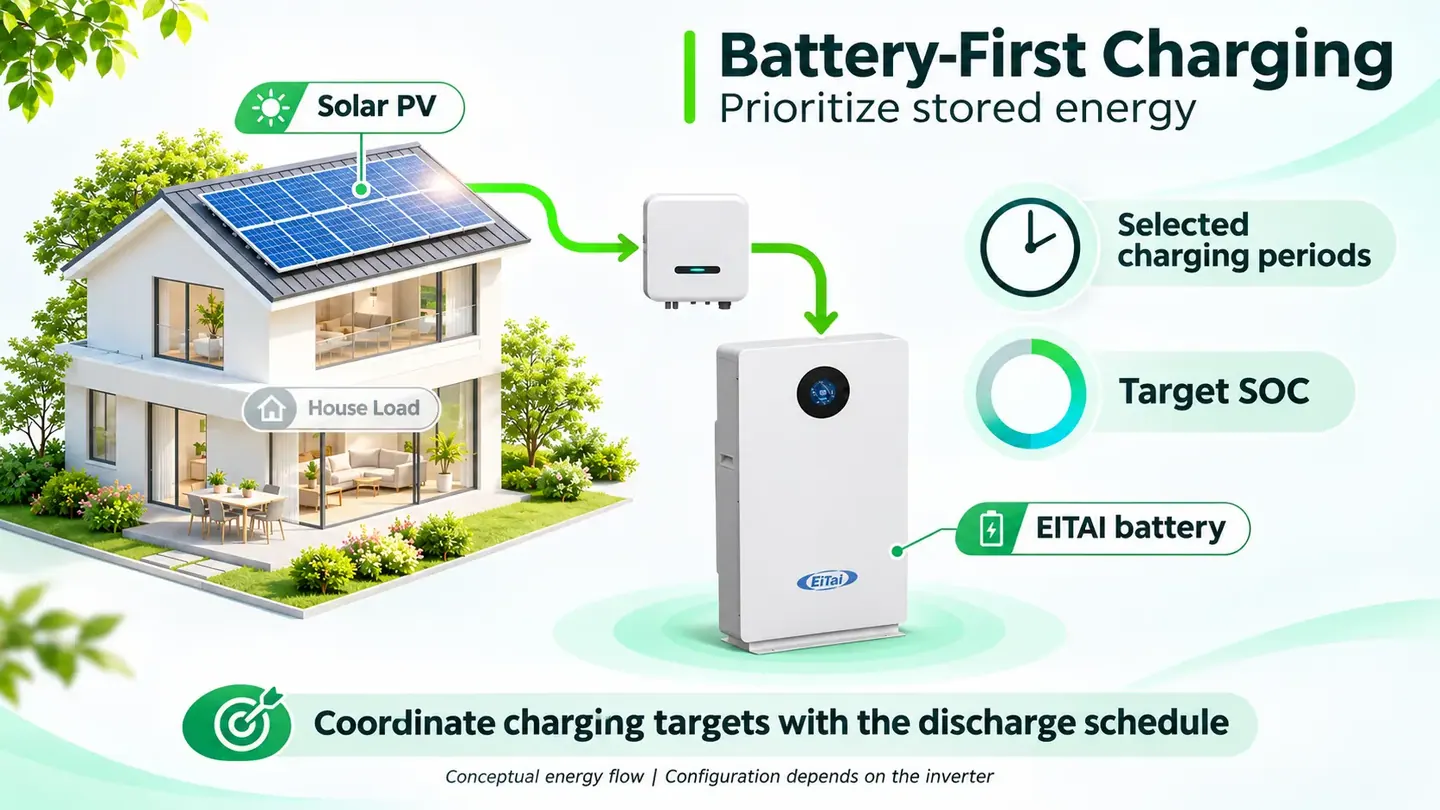
A battery-first strategy prioritizes charging the battery during selected operating periods.
Depending on the inverter, solar generation may charge the battery before supplying other energy demands. Grid charging may also be available when supported, enabled, and permitted.
This strategy can help prepare the battery before an expected outage or establish a charging window ahead of an expensive electricity period.
However, prioritizing charging does not, by itself, define how much energy remains available later. Discharge schedules and minimum SOC settings must also support the customer’s objective.
3. Backup Reserve: Keep Energy Available for Outages
Customers in areas with unreliable grid supply may place backup readiness above maximum daily savings.
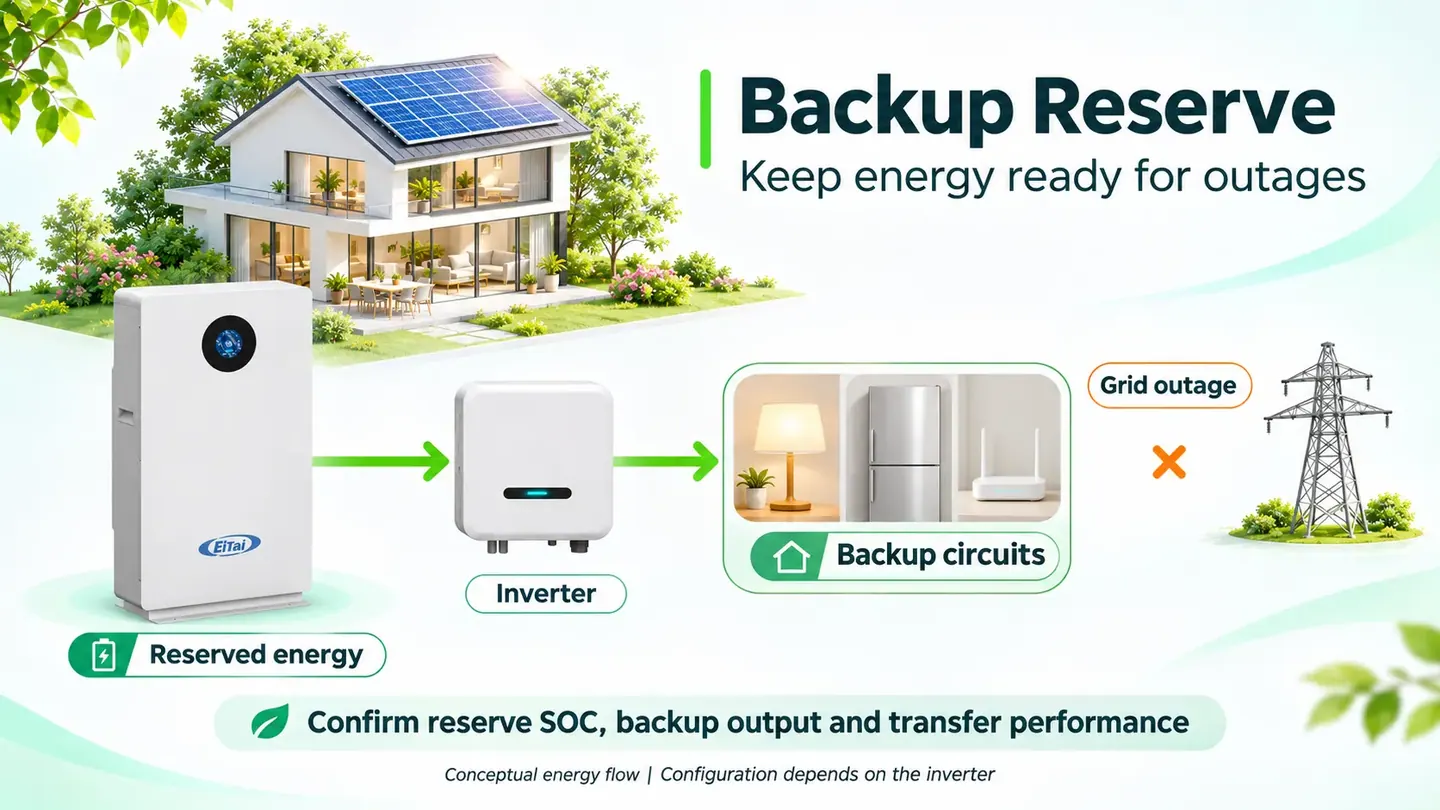
A backup-oriented configuration maintains a defined energy reserve while the grid is available. During an outage, a compatible backup-capable inverter supplies the designated backup circuits from the battery and available solar generation.
The reserve should be based on the critical loads and required operating time. A percentage setting alone does not explain how much backup the customer will receive.
For example, a 500 W average critical load operating for four hours requires approximately 2 kWh of AC energy. The battery reserve must account for conversion losses, system consumption, and an appropriate operating margin.
4. Time-of-Use Scheduling: Shift Energy Away from Expensive Periods
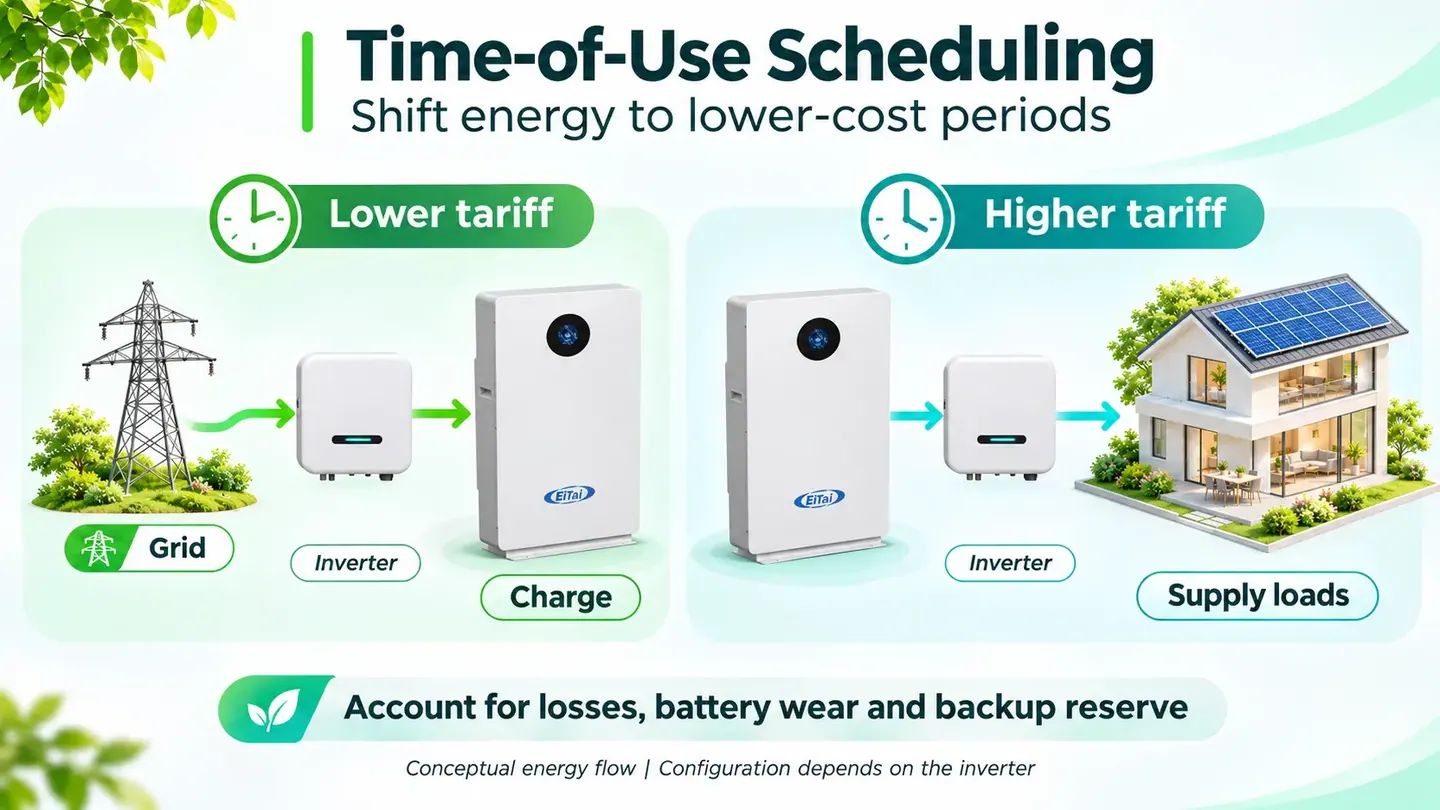
Where electricity tariffs vary by time, scheduled charging and discharging can reduce purchases during expensive periods.
A typical strategy charges the battery during lower-cost hours and discharges it to support building loads during higher-cost hours. Solar generation can contribute to the charging plan.
The schedule should follow the customer’s actual tariff and consumption pattern. Peak periods may occur in the afternoon, evening, or at other times depending on the market.
Savings depend on more than the difference between two electricity prices. The assessment should include:
- Charging and conversion losses.
- Battery energy throughput and degradation.
- Available charging and discharging power.
- The value of any solar energy that would otherwise be exported.
- Energy reserved for backup.
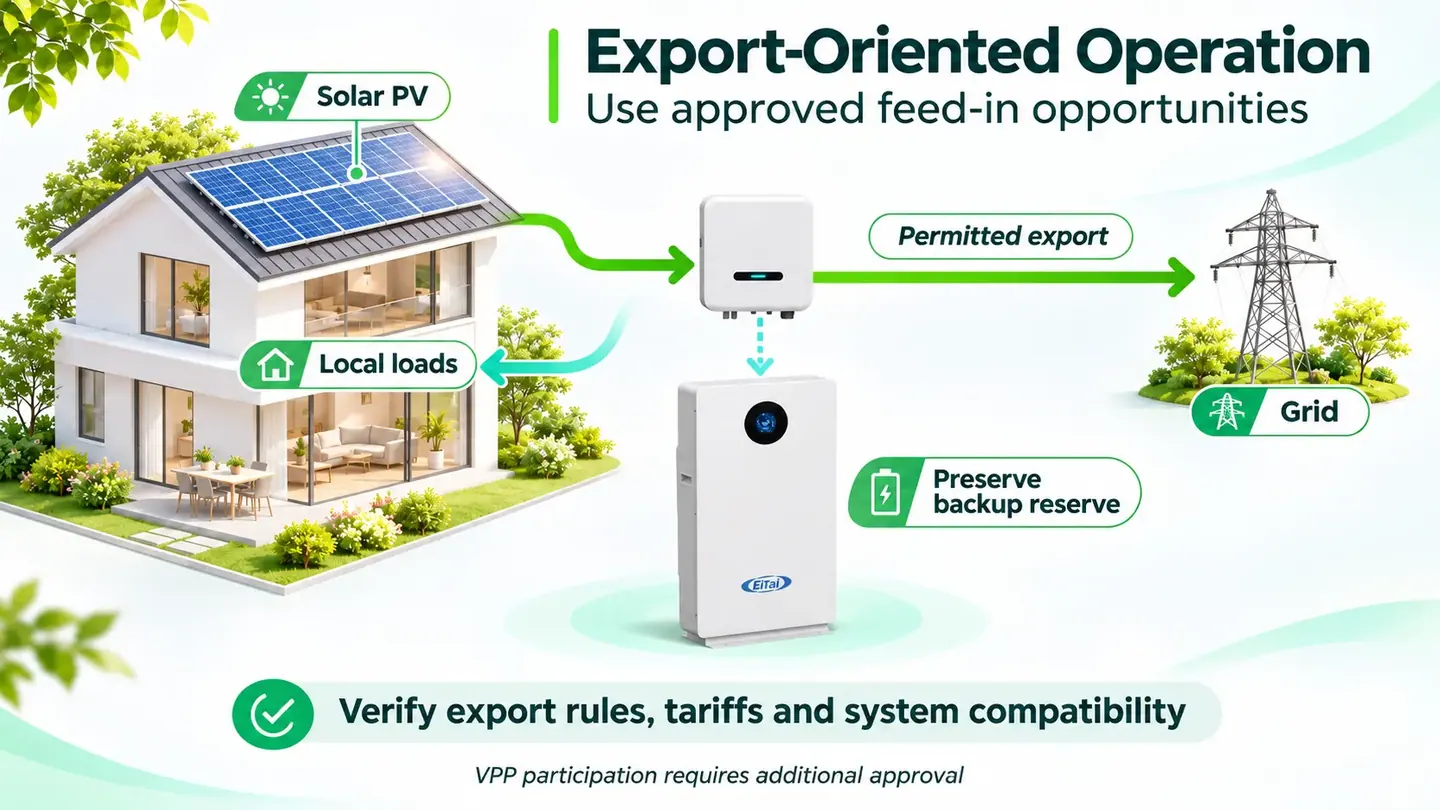
5. Export-Oriented Operation: Respond to Feed-In Opportunities
Some projects benefit from favorable export tariffs or participation in an approved energy aggregation program.
An export-oriented strategy may prioritize exporting available solar energy or permit scheduled battery discharge to the grid. The exact behavior depends on the inverter, control settings, and applicable rules.
Virtual power plant participation requires additional checks. Selecting a “grid-first” setting does not automatically establish eligibility or enable third-party dispatch.
6. Zero-Export Control: Operate Within Grid Export Limits
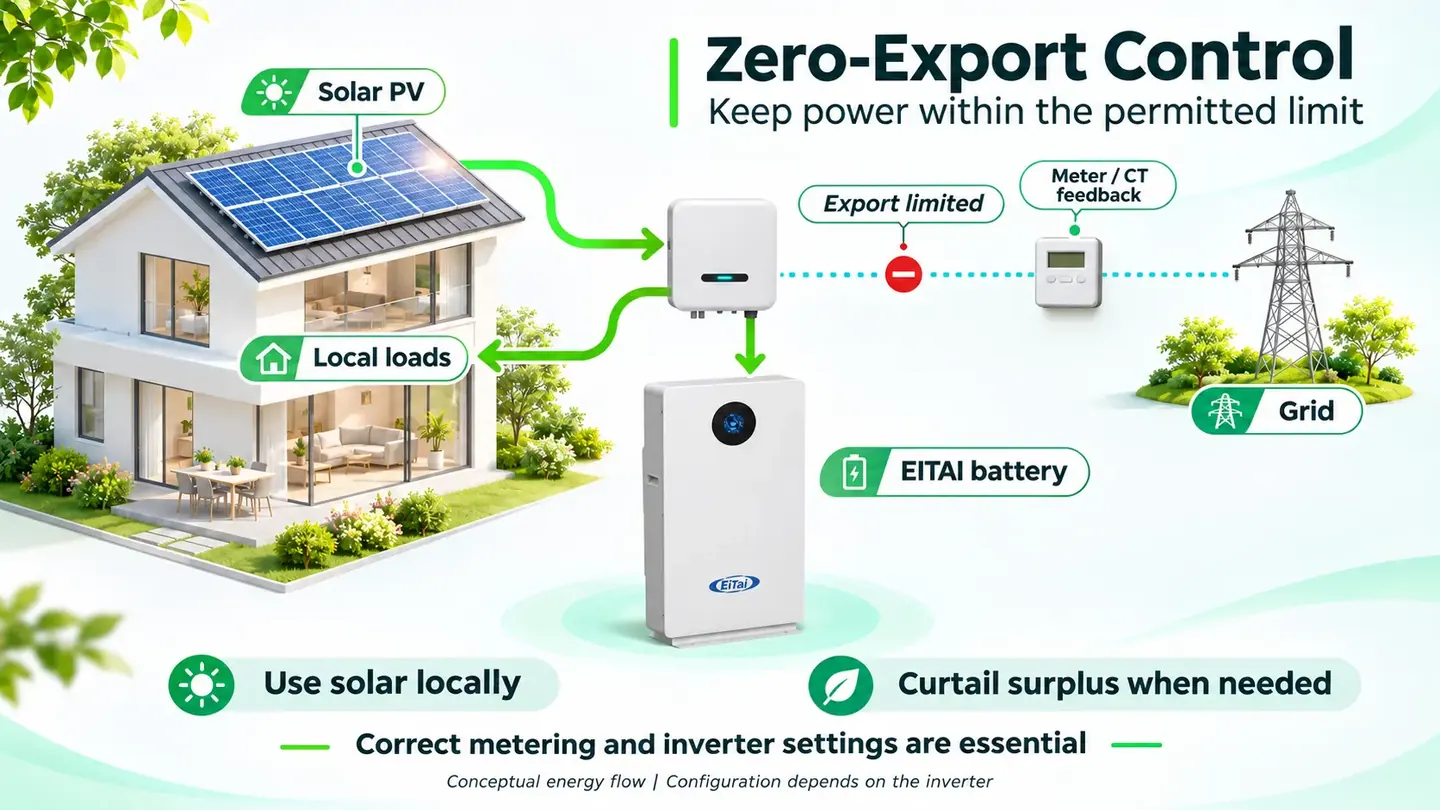
Where export is restricted, the system may need to limit power flowing back to the grid.
Zero-export control commonly works alongside self-consumption or another supported operating strategy. It relies on the inverter’s export-control capability and correctly installed metering or current transformers.
Solar energy can supply local loads and charge the battery. When neither can absorb the available generation, the system may curtail solar output.
7. Off-Grid Operation: Design for Independent Supply
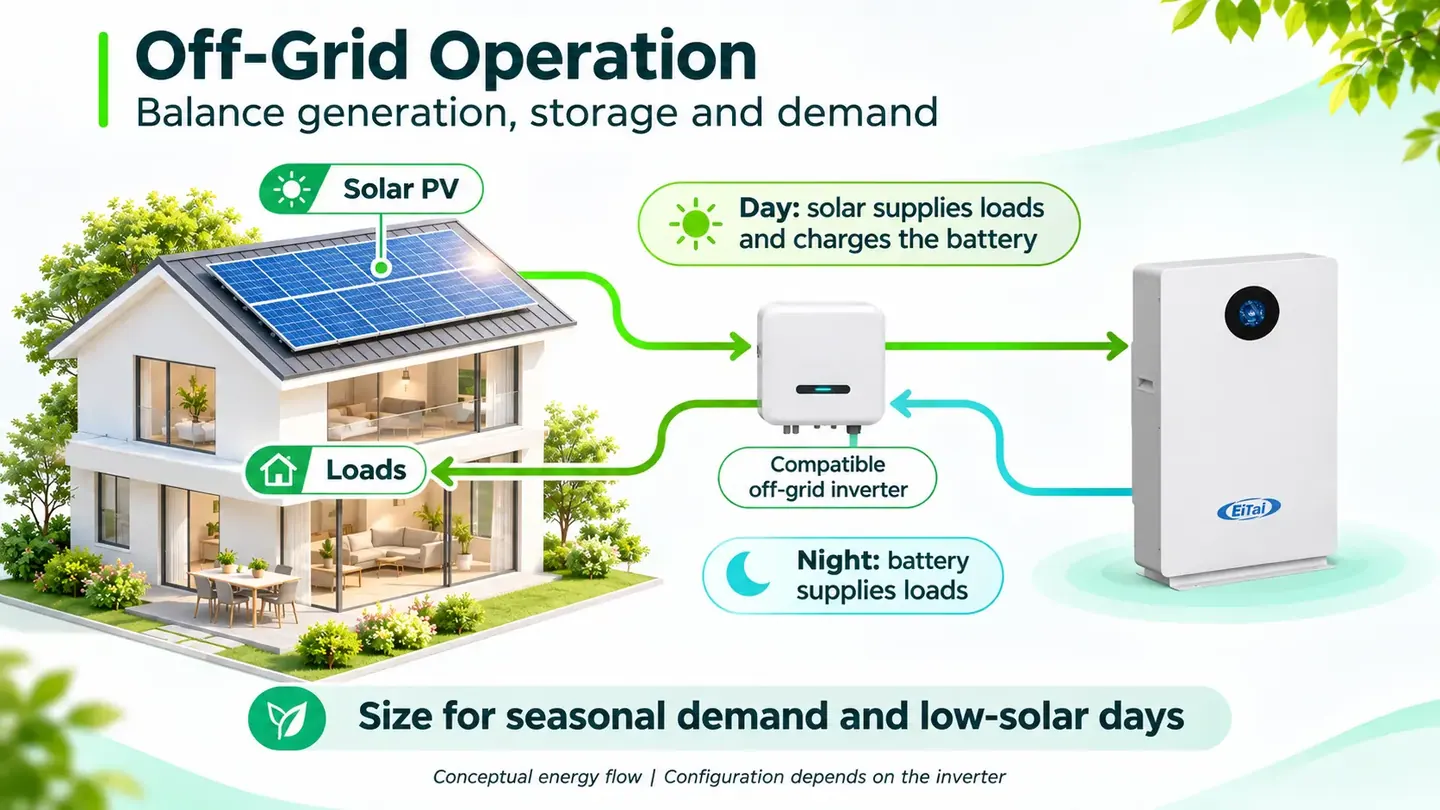
A permanent off-grid system must balance generation, storage, and consumption without relying on utility electricity.
Solar generation supplies daytime loads and charges the battery. Stored energy then supports demand when solar generation is insufficient.
Sizing should consider seasonal conditions, consecutive low-solar days, starting loads, and any planned generator support.
A suitable operating strategy needs a battery configuration that can support it.
For residential projects, the ELEMAGIC 10.2K-LV provides a 10.24 kWh nominal-energy option with flexible wall or floor installation.
For projects requiring more stored energy per unit, the ELEMAGIC 16K-LV offers 16.08 kWh of nominal energy and 14.47 kWh of usable energy at the published 90% DoD. Its floor-standing design includes four universal wheels. Explore ELEMAGIC 16K-LV.
Both product pages list support for up to 15 units in parallel. Expansion must follow the relevant product instructions and the supported inverter and battery configuration.
When selecting a system, confirm:
- Required usable energy and backup reserve.
- Recommended and maximum charge/discharge limits.
- Inverter voltage compatibility.
- Validated BMS communication protocol and firmware.
- Installation and environmental requirements.
- Supported expansion arrangements.
The presence of a CAN or RS485 interface alone does not confirm compatibility. Verify the specific battery–inverter combination before commissioning.
Planning a residential or small commercial storage project? Share the inverter model, electricity tariff, load profile, required backup time, and export conditions with EITAI. Our team can help review suitable battery options and the system information needed for your application.