

How to Size a Home Solar + Storage System: Get These Two Parameters Right
Installing home solar plus storage is a long-term investment. The biggest fear for most homeowners is simple: oversizing wastes money, undersizing leaves you short. Many people focus only on panel wattage or battery nameplate capacity, but two parameters matter far more:
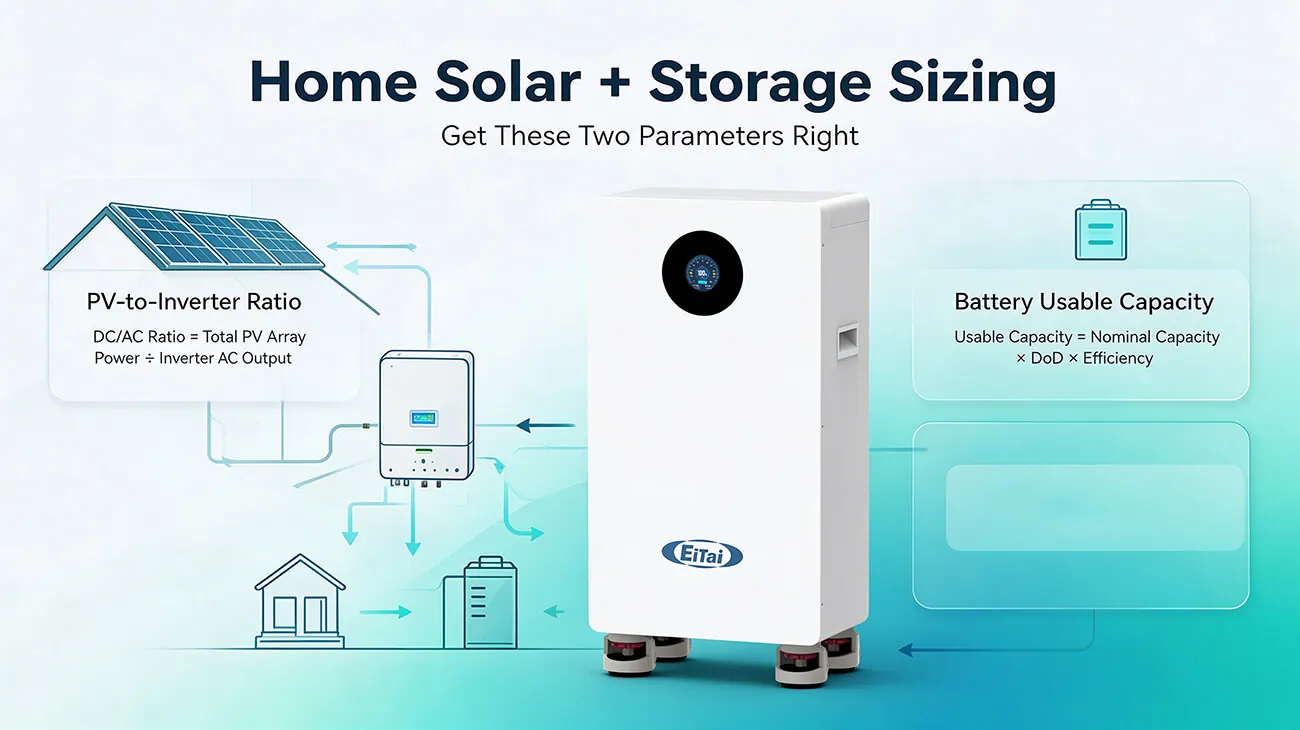
PV-to-inverter ratio (DC/AC ratio)
Battery usable capacity
Get these two right, and you will maximize savings, improve backup reliability, and shorten your payback period. This guide explains the logic in plain language — no engineering degree required.
1. The Two Core Parameters
① PV-to-Inverter Ratio: The “Match” Between Panels and Inverter
Formula:DC/AC ratio = Total PV array power (kW DC) ÷ Inverter rated AC output (kW)
Think of it this way: PV panels generate the electricity, and the inverter converts it for home use. If the ratio is well matched, you avoid wasted generation and unnecessary stress on the inverter.
Different system types:
Grid-tied only: You can often install as much PV as your roof allows, within local rules.
Solar + storage: The priority shifts to charging the battery. You want enough PV to refill the battery during the day and minimize clipping (wasted solar).
② Battery Capacity: Your Home’s “Energy Warehouse”
Important reminder: Battery nameplate capacity is not the same as usable capacity.
For most residential LFP (lithium iron phosphate) batteries, two typical values apply:
Depth of Discharge (DoD): 90%
System round-trip efficiency: 90%
Practical formulas:Usable capacity = Nominal capacity × 90% × 90%
Required nominal capacity = Energy you need to store ÷ (90% × 90%)
Take the EITAI ELEMAGIC-14.3 LV as an example. It has a nominal energy of 14.34 kWh, and at 90% depth of discharge (DOD), its usable energy is 12.9 kWh. For the larger ELEMAGIC-16 LV, nominal energy is 16.08 kWh and usable energy is 14.47 kWh. Always ask your supplier for the usable capacity, not just the nominal rating.
2. How to Choose the DC/AC Ratio
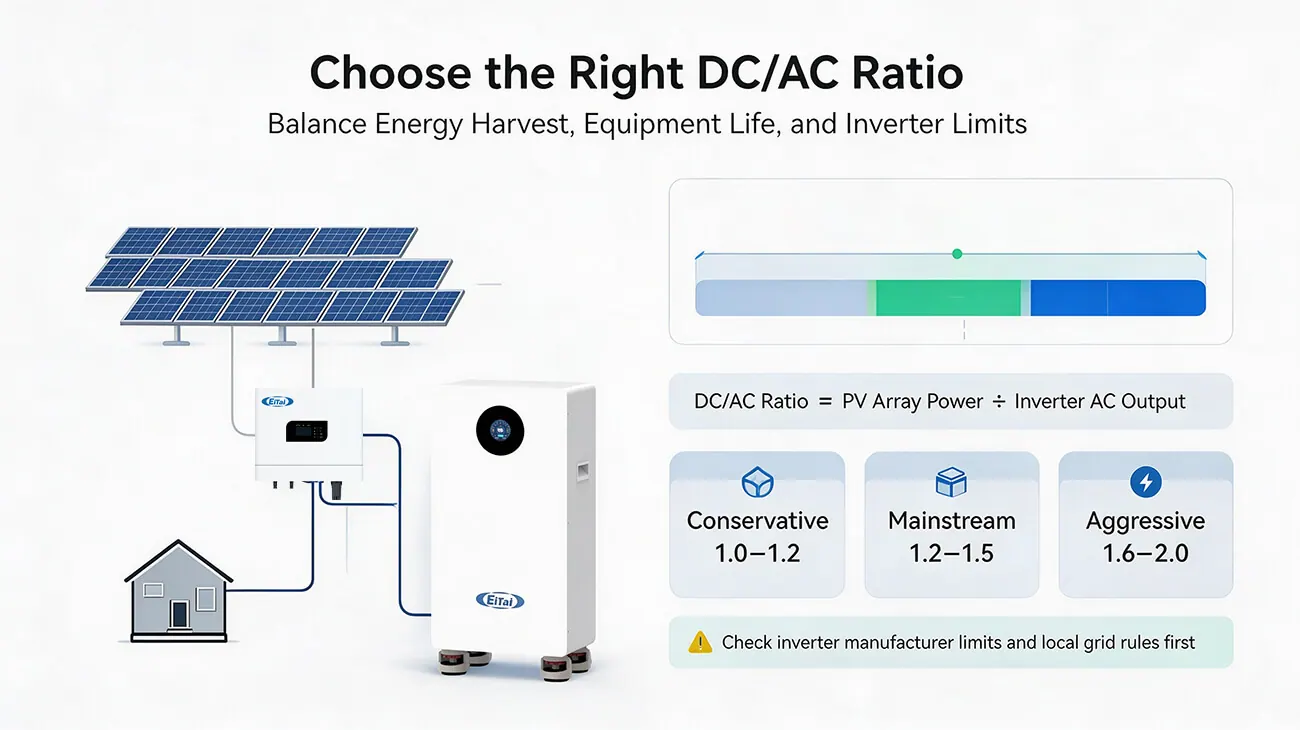
A higher ratio is not automatically better. If the ratio is too high, the inverter may clip excess generation, run into overload conditions, and age faster. For residential solar + storage, the mainstream range is:
Conservative: 1.0–1.2
Best for homes with low daytime consumption and heavy night-time use. The system stores solar by day and discharges at night.Mainstream: 1.2–1.5
Best for most homes with both daytime and night-time loads. This range balances energy harvest with equipment longevity. This is the most common choice for typical households.Aggressive: 1.6–2.0
Best for homes with high loads and limited roof space. It maximizes the array size within the available area.
Before you decide: Always check the inverter manufacturer’s maximum allowed DC/AC ratio and any local grid connection rules. Some inverters allow ratios above 1.5, but not all.
3. Battery Capacity Sizing: Focus on Two Core Needs
1) Daily Bill Savings
Look at your utility bill and estimate your night-time consumption — typically from 8 p.m. to 8 a.m. Size the battery to cover that night-time load. The battery charges from solar during the day and discharges at night, reducing expensive grid purchases.
The EITAI ELEMAGIC-14.3/16 LV floor-standing battery covers 14.3 kWh to 16 kWh per unit, which directly meets the “store by day, use at night” needs of most households. Its four universal wheels make installation and relocation easy, ideal for garages, utility rooms, and similar spaces.
2) Backup Power During Outages
Choose based on how often outages occur and what you need to keep running:
Basic (1 day of backup): Lights, refrigerator, phone charging, internet router. A single EITAI 14.3 kWh unit can easily handle this.
Comfort (2–3 days of backup): Adds air conditioning, kitchen appliances, and other daily essentials. Choose a single EITAI 16 kWh unit or two units in parallel.
High (3+ days of backup): For remote areas or homes with high reliability requirements, supporting extended off-grid operation. EITAI batteries support up to 15 units in parallel, with total capacity exceeding 240 kWh, easily meeting high backup needs.
If you live in an area with frequent or long outages, size the battery for backup first, then optimize for daily savings.
4. Three Common Mistakes to Avoid
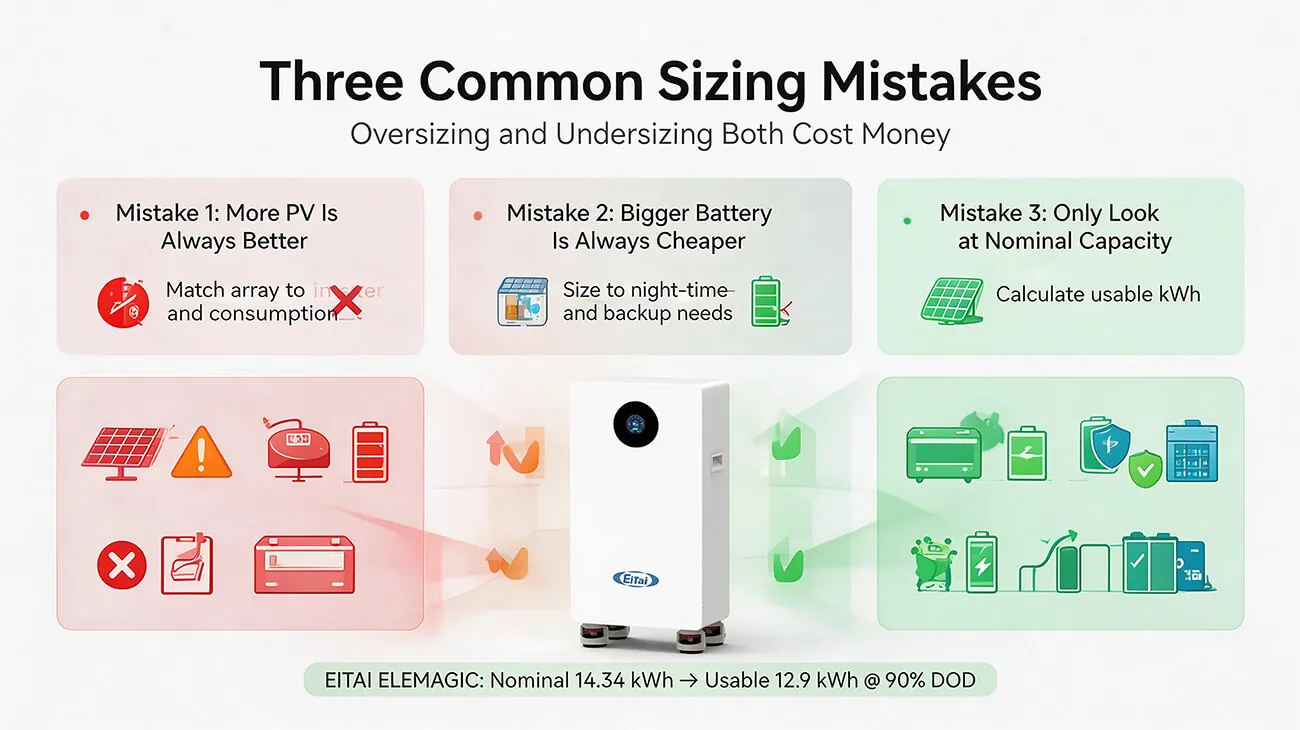
Mistake 1: “More PV panels are always better.”
Oversizing the array relative to the inverter leads to clipping and wasted equipment cost. Match the array to the inverter and your consumption profile.
Mistake 2: “A bigger battery is always more cost-effective.”
Extra capacity that sits idle most of the year increases upfront cost without adding value. Size to your actual night-time and backup needs. EITAI supports up to 15 units in parallel, which means you can expand on demand rather than over-invest all at once.
Mistake 3: “Just look at the battery’s nominal capacity.”
Ignoring depth of discharge and system efficiency means the real usable energy is much lower than the label suggests. Always calculate usable kWh. For example, EITAI’s product datasheets clearly distinguish between nominal energy (14.34 kWh) and usable energy (12.9 kWh @ 90% DOD) — a standard practice among professional manufacturers.
5. Quick Self-Check: 4 Steps to Your Own Solar + Storage Plan
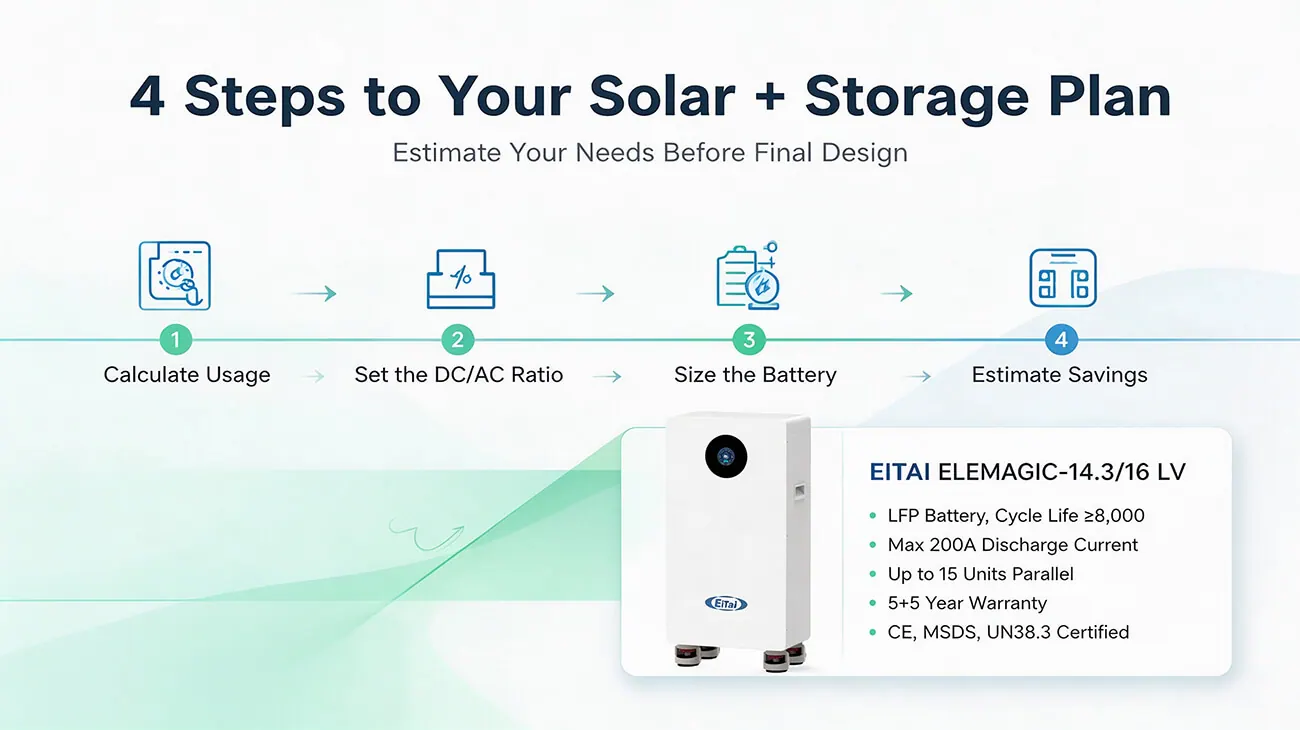
Calculate usage: Find your daily and night-time kWh from utility bills.
Set the DC/AC ratio: Aim for 1.2–1.5 for most homes; confirm inverter limits.
Size the battery: Combine night-time consumption with backup requirements. The EITAI ELEMAGIC series offers single-unit options from 14.3 kWh to 16 kWh, with parallel expansion up to 15 units.
Estimate savings: Use local electricity tariffs and incentives to estimate payback period.
Conclusion and Recommended Solution
For home solar + storage, the right size beats the biggest size. Matching the PV-to-inverter ratio and battery usable capacity to your actual consumption gives you maximum savings, longer equipment life, and a faster return on investment. Avoid oversizing, avoid undersizing — and always work with a qualified installer for the final design.